세계YMCA 운동
YMCA의 비전은 모든 사람이 자기 자신과, 사회와, 피조 세계와 조화를 이루며 살아가는 세상입니다.
YMCA의 사명은 전 세계의 청년과 지역사회에 힘을 실어, 모든 사람이 몸과 마음과 정신으로 온전히 살아갈 수 있는 정의롭고 지속가능하며 형평하고 포용적인 세상을 만드는 것입니다. YMCA는 청년들이 자신과 세계에 중요한 문제에 대해 목소리를 찾고 나눌 수 있도록 힘을 북돋우고 영감을 주며 함께 나서게 하는, 세계적인 청년 역량강화 기구이자 가장 신뢰받는 협력 상대가 되는 것을 목표로 합니다. 이를 위해 ‘YMCA 비전 2030’에 따라 지역사회의 복지(Community Wellbeing), 의미 있는 일자리(Meaningful Work), 지속가능한 지구(Sustainable Planet), 정의로운 세상(Just World)의 네 영역에서 활동합니다.
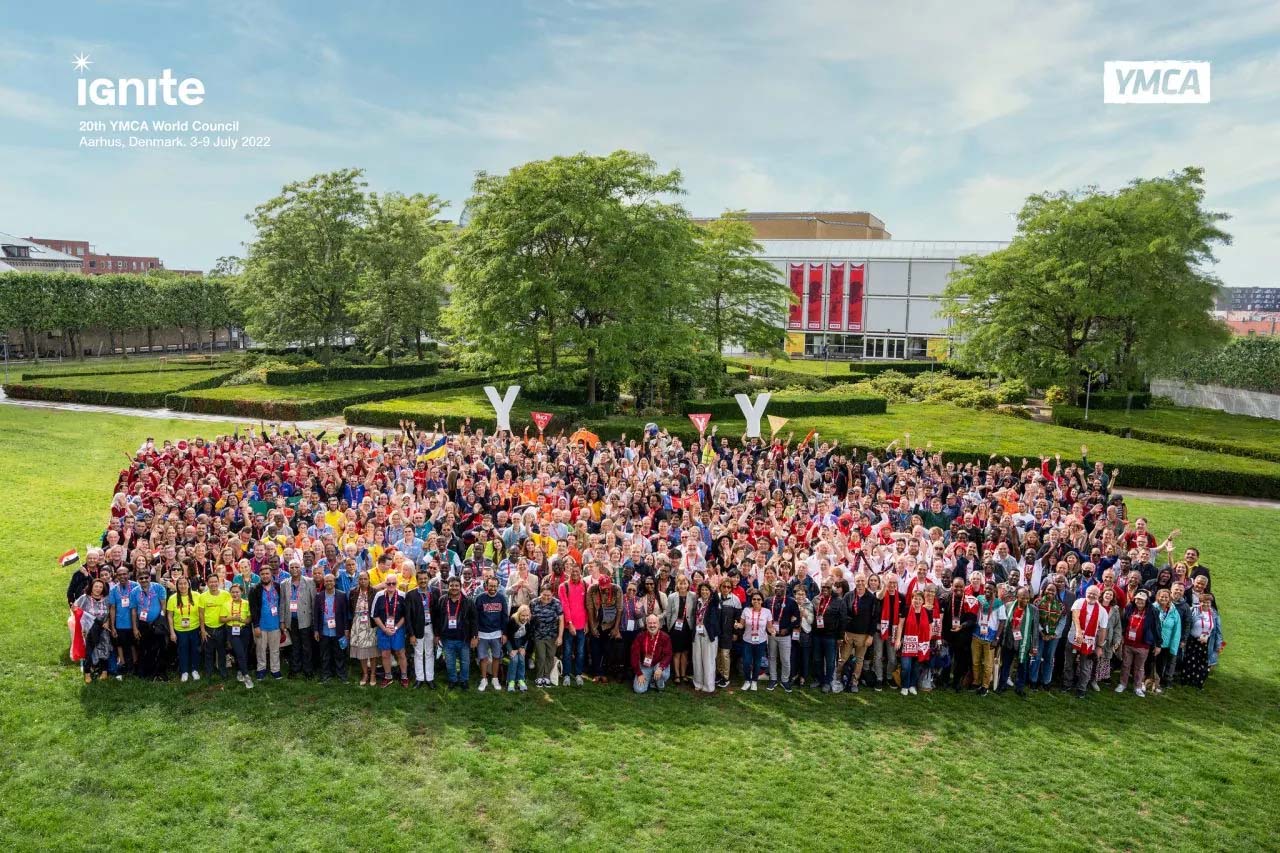
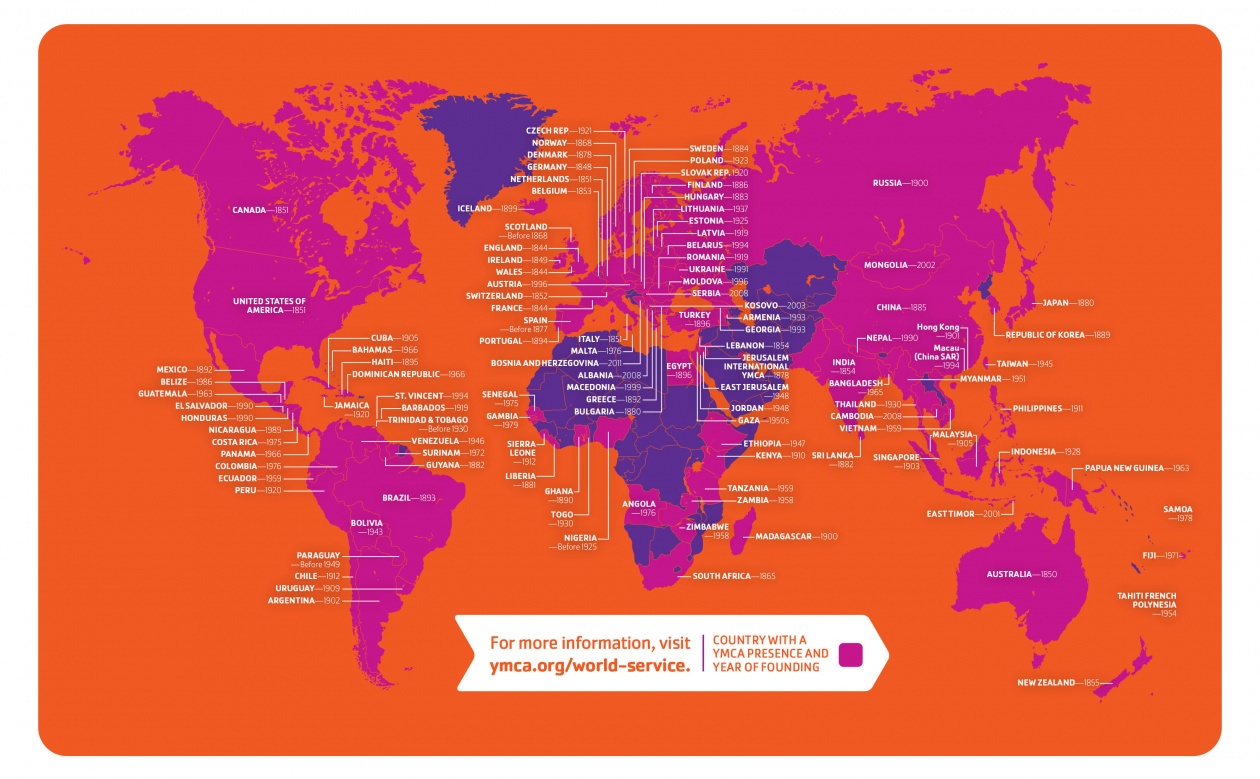
YMCA는 청년들이 스스로를, 자신의 지역사회를, 나아가 세계를 더 낫게 만들도록 돕습니다. YMCA는 세계에서 가장 오래되고 규모가 큰 청년 단체 가운데 하나입니다. 1844년 런던에서 시작해 오늘날 120개국에서 해마다 6,500만 명이 넘는 사람들을 만나고 있습니다. 지역사회에 깊이 뿌리내린 조직과, 청년과 지역사회의 성장을 도운 오랜 경험, 그리고 폭넓은 국제 네트워크를 갖추고 있으며, 전 세계에 약 9만 명의 실무자와 92만 명의 자원봉사자, 1만 2천여 개의 지역 조직이 함께하고 있습니다.
 세계YMCA연맹 누리집 ymca.int 바로가기 ↗
YMCA’s vision is a world where every person lives in harmony with self, with society and with creation. Its mission is to empower young people and communities worldwide to build a just, sustainable, equitable and inclusive world, where every person can thrive in body, mind and spirit. Its goal is to be the global youth empowerment organisation and partner of choice: empowering, inspiring and mobilising young people to find and share their voice on the issues that matter to them and to the world. It operates in four main areas through YMCA Vision 2030: Community Wellbeing, Meaningful Work, Sustainable Planet, and Just World.
YMCA helps young people to better themselves, to better their communities, and to better their world. It is the oldest and one of the largest youth organisations in the world. Founded in London in 1844, it has grown to reach over 65 million people a year across 120 countries. It has deep roots in communities, decades of experience enabling young people and communities to thrive, and an extensive global network. It has nearly 90,000 staff, some 920,000 volunteers and 12,000 branches worldwide.
세계YMCA의 시작
세계YMCA는 영국 산업혁명기 청년들의 정신적,영적 각성과 개선을 위해 조지 윌리암스(George Williams) 등12명의 젊은이들에 의해 1844년 런던에서 시작된다.
이들은 독일 스페너(Philipp Jakob Spener)목사의 경건주의와 만인사제론에 입각한 생활인기독자성의 자각,선교에의 정열과 기독교 일치운동에 대한 소망을 갖고 1844년 6월 6일, 조지 윌리암스의 하숙방에서 열두 명의 뜻을 같이하는 친구들이 모여 “청년들의 기독교협회(The Young Men's Christian Association-YMCA-기독교청년회)”를 조직한다.
YMCA는 산업화 초기 청년들의(주체),삶의 자리에서(현장),영적 각성(영성)과 삶의 개선(공동체)을 위해 시작된 운동(Association)이었다.
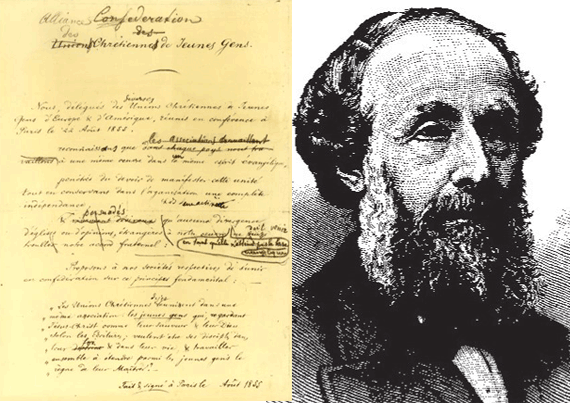
세계YMCA 파리기준
기독교 청년회는 성경대로 예수그리스도를 하느님과 구주로 믿어 그 신앙과 생활에서 그의 제자되기를 원하는 청년들을 하나로 뭉치고 또 그 힘을 합하여 청년들 가운데 그의 나라를 확장하는 것을 목적으로 한다.
The continuing basis of the work and witness of the Young Men's Christian Association is expressed in the Paris Basis, as adopted by the delegates of the First World Conference in Paris in 1855, and reaffirmed by the 6th World Council of YMCAs in 1973:
“The Young Men's Christian Associations seek to unite those young men who, regarding Jesus Christ as their God and Saviour, according to the Holy Scriptures, desire to be his disciples in their faith and in their life, and to associate their efforts for the extension of his Kingdom amongst young men.
Any differences of opinion on other subjects, however important in themselves, shall not interfere with the harmonious relations of the constituent members and associates of the World Alliance.”
세계YMCA 캄팔라원칙
파리기준은 그리스도가 청년회 운동의 중심임을 표현하는 것으로서, 그러기에 청년회는 모든 종파에 속한 그리스도인을 단결 시키는 범세계적 교의체로서 파악되는 것이다. 기독교청년회가 하나의 개방적인 회원 정책을 가짐으로써 종교, 연령, 성, 종족, 사회적 신분 등에 관계없이 모든 사람들이 참여한다는 사실은 파리 기준의 정신에 일치한다.
파리 기준은 일개인의 YMCA회원 자격을 규정하는 조건으로서 마련된 것이 아니다. 그러한 것은 세계 연맹의 정회원인 각국 청년회의 자유재량에 일임하는 배려가 되어 있다. 파리 기준은 각국의 정회원 청년회가 각자의 목적을 다른 용어로써 표현할 수 있는 완전한 자유가 보유하고 있음을 명백히 하고 있다.
그렇게 함으로써 각국의 청년회는 자기들의 봉사의 대상자들의 요구와 염원에 보다 더 직접적으로 수응할 수 있을 것이기 때문이다. 다만 그렇게 하여서 만들어진 청년회의 목적은 반드시 세계 연맹에 의하여 파리 기준의 정신에 일치라는 것으로 인준되어야 한다.
오늘의 세계를 사는 YMCA의 성격을 인식할 때, 파리 기준의 정신을 천명하는 이 행위는, 각양 각색의 청년회들과 저들의 회원들로 하여금 하느님의 동역자로서의 의식을 가지고 같은 명령에 복종하여야 할 의무를 부과하는 것이 된다.
- 만인에게 평등한 기회와 공정이 주어지기 위하여 일한다.
- 사람들간에 모든 관계가 이해와 사랑이 넘치는 환경이 되도록 하며, 또한 이를 유지하기 위하여 일한다.
- YMCA와 사회 안에서 YMCA 산하의 조직체들과 기관들 안에서 성실과 깊이와 창의성이 용납되는 조건들을 만들고 또 이를 유지하기 위해 일한다.
- 기독교적 경험의 다양성과 심오성을 실증하는 지도력 및 프로그램의 표본을 발전시키고 또 이를 유지한다.
- 전인적인 인격의 개발을 위하여 일한다.
The 6th World Council meeting in Kampala, Uganda, in July 1973, adopted at the same time the following declaration of principles:
The Paris Basis expresses that Christ is the centre of the Movement, which is conceived as a world-wide fellowship uniting Christians of all confessions. It is consistent with an open membership policy, involving people irrespective of faith as well as age, sex, race and social condition. The Basis is not designed to serve as a condition of individual YMCA membership, which is deliberately left to the discretion of constituent movements of the World Alliance. The Basis makes clear that the constituent movements of the Alliance have full freedom to express their purpose in other terms designed to correspond more directly to the needs and aspirations of those whom they are seeking to serve, provided these are regarded by the World Alliance as being consistent with the Paris Basis. Recognising the character of the YMCAs in the world today, this act of acknowledging the Paris Basis places upon the various associations and their members as fellow workers with God such imperatives as:
- To work for equal opportunity and justice for all.
- To work for and maintain an environment in which relationships among people are characterised by love and understanding.
- To work for and maintain conditions, within the YMCA and in society, its organisations and institutions, which allow for honesty, depth and creativity.
- To develop and maintain leadership and programme patterns which exemplify the varieties and depth of Christian experience.
- To work for the development of the whole person.
세계YMCA 도전21
『도전 21』은 새 천년에 예상되는 구체적인 필요와 가능성에 의거하여 YMCA가 감당해야 할 책임을 의미한다.
도전 21』의 잠재적인 의제 및 기본방향은 YMCA를 광범위한 사회적 상황과의 연관성 속에 자리매김케 한다. 『도전 21』은 의식적으로 목적문이라고 명시하지 않았다. 목적문은 이를 모색하는 더 계속되는 과정의 결과로서 도출될 수 있을 것이다.
그 때까지 당분간 우리는 <파리 기준>을 YMCA 목적문의 근거로 유지하면서, 『도전21』을 현시대에 YMCA사명에 대한 이해를 새롭게 하기 위한 진일보한 문서로서 이해하고자 한다. 현 시대가 더욱 복잡해짐에 따라 우리는 시대의 부름에 응답하는 동시에 우리의 근거에 더 깊이 뿌리내릴 수 있는 길을 모색해야 할 것이다.
세 번째 천년을 맞이하는 지금,
우리는 1855년에 채택된 파리 기준이 YMCA사명의 근간임을 확인하면서, YMCA가 청년들의 진정한 참여를 강조하는, 여성과 남성 모두를 아우르는 기독교운동이며, 에큐메니컬 정신에 기초한 자발적인 운동임을 선언한다. 또한 YMCA는 모든 피조물이 충만한 삶을 영위할 수 있도록, 정의에 기초한 사랑과 평화 그리고 화해의 인간공동체를 건설하려는 기독교적 이상을 나누기 위해 애쓸 것이다.
그러므로 각각의 YMCA는 각자가 처한 고유한 사회적 맥락 속에서 우선적으로 제기되는 도전들에 촛점을 맞출 것을 요청받는다. 1973년에 채택된 캄팔라 원칙을 발전적으로 계승한 이러한 도전들은 다음의 내용을 포함한다.
- 예수그리스도의 복음을 나누며, 개인의 영.지.체적 안녕과 건강한 공동체 형성을 위해 일한다.
- 모든 사람들, 특별히 청년과 여성들이 더 큰 책임을 맡고 모든 영역에서 지도력을 발휘할 수 있도록 이들의 역량을 키우고, 형평성 있는 사회를 위해 일한다.
- 여성의 권리를 옹호하고 북돋우며, 아동의 권리를 증진시킨다.
- 신념과 이념이 다른 사람들 간에 대화와 파트너쉽을 증진시키고, 문화적 정체성을 인정하며, 아울러 문화적 갱신을 촉진한다.
- 가난하고 착취당하며, 삶의 터전을 잃은 사람들과, 인종적, 종교적, 민족적으로 억압받는 소수자들과 함께 연대하여 일한다.
- 분쟁이 있는 곳에서 중재자와 화해자의 역할을 추구하며, 모든 이들이 자기결정력을 갖기 위해 의미있는 참여와 진보를 할 수 있도록 일한다.
- 하나님의 창조물을 파괴하려는 모든 것으로부터 피조물을 보호하며, 미래세대를 위해 지구의 자원을 보존하고 보호한다.
이러한 도전에 응전하기 위해 YMCA는 모든 단계에서 자기 스스로의 존속과 자결을 가능케 하는 협력의 패턴을 개발할 것이다.
The World Alliance of YMCAs was founded in 1855 at its first World Conference, held in Paris. At that time, conference participants developed the YMCA’s first mission statement, the Paris Basis. Since then, the YMCA’s mission statement has been interpreted to reflect contemporary realities, first in 1973 with the Kampala Principles, and most recently in 1998 with Challenge 21.
Challenge 21, adopted at the 14th World Council of YMCAs, Frechen, Germany, 1998 states that:
“Affirming the Paris Basis adopted in 1855 as the ongoing foundation statement of the mission of the YMCA, at the threshold of the third millennium we declare that the YMCA is a world-wide Christian, ecumenical, voluntary movement for women and men with special emphasis on and the genuine involvement of young people and that it seeks to share the Christian ideal of building a human community of justice with love, peace and reconciliation for the fullness of life for all creation.
Each member YMCA is therefore called to focus on certain challenges which will be prioritized according to its own context. These challenges, which are an evolution of the Kampala Principles, are:
- Sharing the good news of Jesus Christ and striving for spiritual, intellectual and physical well-being of individuals and wholeness of communities.
- Empowering all, especially young people and women to take increased responsibilities and assume leadership at all levels and working towards an equitable society.
- Advocating for and promoting the rights of women and upholding the rights of children.
- Fostering dialogue and partnership between people of different faiths and ideologies and recognizing the cultural identities of people and promoting cultural renewal.
- Committing to work in solidarity with the poor, dispossessed, uprooted people and oppressed racial, religious and ethnic minorities.
- Seeking to be mediators and reconcilers in situations of conflict and working for meaningful participation and advancement of people for their own self-determination.
- Defending God’s creation against all that would destroy it and preserving and protecting the earth’s resources for coming generations. To face these challenges, the YMCA will develop patterns of co-operation at all levels that enable self-sustenance and self-determination.”
Adopted at the 14th World Council of YMCAs, Frechen, Germany, 1998